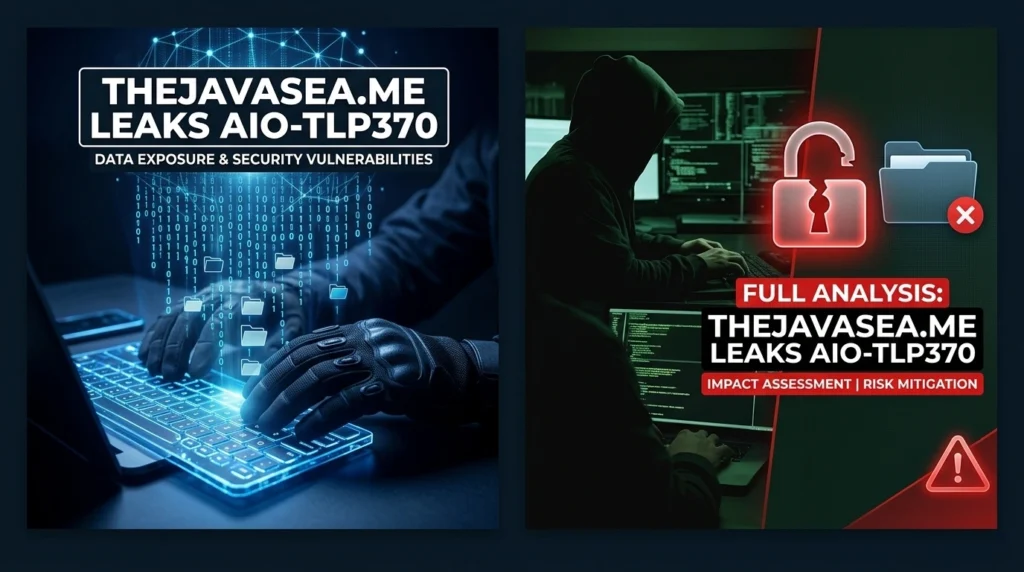

Thejavasea.me leaks aio-tlp370 refers to a reported data exposure involving a bundled archive of sensitive technical information, such as source code, credentials, and system files. While not all details are officially confirmed, it is generally understood as a structured leak that could pose security risks to both individuals and organizations. The main concern is that such data can reveal system vulnerabilities or allow unauthorized access if misused. If you have come across this term, the safest approach is to strengthen your account security, avoid interacting with any leaked material, and stay updated through reliable sources.
If you’ve recently come across the term thejavasea.me leaks aio-tlp370, you are probably trying to understand what it actually means and whether it is something serious. You may be wondering if it could affect your personal data, your online accounts, or even your business systems.
That confusion is completely understandable. The phrase sounds technical, unclear, and even alarming. Many websites mention it, but very few explain what is actually happening in a clear and reliable way.
This article solves that problem.
Here, you will learn what thejavasea.me leaks aio-tlp370 refers to, what kind of data may be involved, what risks exist, and what actions you should take right now to stay safe.
What Is TheJavaSea.me Leaks AIO-TLP370?
Thejavasea.me leaks aio-tlp370 is generally understood as a reference to a reported data exposure involving a structured collection of digital files. These files are believed to be shared or discussed on leak-related platforms, often in bundled form.
Unlike a typical data breach where a single database is exposed, this situation appears to involve a compiled archive. This means that multiple types of files may have been grouped together and distributed as a single package. This kind of packaging increases both the complexity and the potential impact of the leak.
It is important to note that there is no widely verified official report confirming every detail about this leak. Much of the available information comes from online discussions, cybersecurity observations, and technical interpretations. Because of this, it is important to approach the topic carefully and avoid assuming that all claims are fully verified.
However, even with limited confirmation, the structure and nature of the reported data suggest that it should be taken seriously. In modern cybersecurity, even partially exposed datasets can lead to significant risks if they contain sensitive or operational information.
What AIO-TLP370 Actually Means
Understanding the term AIO-TLP370 can help you better interpret the situation.
The “AIO” portion usually stands for “All-In-One.” This indicates that the data involved is not limited to a single file type but instead includes multiple categories of information combined into one package. This could include code, credentials, logs, and other technical components.
The “TLP370” part appears to function as an identifier. It may represent a version, classification label, or internal naming system used to categorize the dataset. While the exact meaning is not officially defined, it is commonly treated as a unique reference for this specific archive.
When combined, AIO-TLP370 suggests a structured, organized collection of information rather than random or scattered data. This is significant because organized datasets are easier to analyze, distribute, and potentially exploit.
This type of naming is often seen in technical environments where large datasets are grouped for convenience or distribution. It does not necessarily confirm the origin of the data, but it does indicate that the dataset may have been intentionally compiled.
What Was Reportedly Exposed
Reports and discussions suggest that the dataset associated with thejavasea.me leaks aio-tlp370 may include several types of sensitive information. While exact details are not fully confirmed, the following categories are commonly mentioned.
Source code is one of the most critical components. This refers to the underlying code used to build applications or systems. When exposed, it allows others to study how a system works internally.
Configuration files are also significant. These files define how systems are set up, including server details, database connections, and security settings. If these are exposed, they can reveal important operational details.
System logs may also be included. Logs can contain records of system activity, including user actions, error messages, and access attempts. These can provide insight into system behavior and potential weaknesses.
Credentials such as API keys, tokens, or passwords are especially sensitive. If valid credentials are exposed, they can allow direct access to systems without needing to break security controls.
Internal documentation may also be part of the dataset. This can include instructions, architecture diagrams, or operational notes that provide deeper insight into how systems are managed.
Even if only part of this information is accurate, the combination of these elements can significantly increase security risks.
Why This Leak Matters in 2026
In 2026, digital systems are more interconnected than ever. Applications rely on multiple services, cloud infrastructure, and third-party integrations. This means that a single data exposure can have a cascading effect.
Thejavasea.me leaks aio-tlp370 matters because it appears to involve structured data that may reveal how systems operate. When attackers understand system design, they can identify weaknesses more easily and develop targeted strategies.
Another reason this leak is important is the potential for long-term impact. Even if the data is not immediately used, it can be stored and analyzed over time. This means that risks may continue to exist long after the initial exposure.
Additionally, modern cyber threats often involve combining multiple sources of information. A dataset like this could be used alongside other leaked data to build a more complete picture of a system or organization.
For both individuals and businesses, this highlights the importance of proactive security. Waiting until a problem appears is no longer enough. Preventive action is now essential.
Main Security Risks
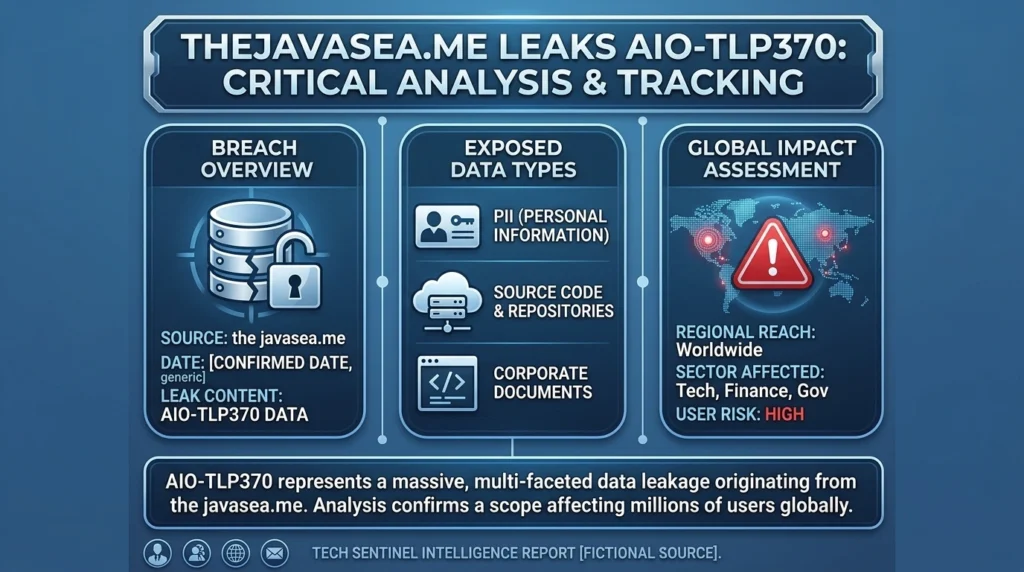
There are several key risks associated with this type of data exposure.
One of the most serious risks is credential exposure. If login details, API keys, or tokens are included, attackers may be able to access systems directly. Even outdated credentials can sometimes be reused or adapted.
Another major risk is system exploitation. Source code and configuration files can reveal vulnerabilities that are not visible from the outside. Attackers can study these details and identify weak points.
Supply chain risk is also a concern. Many systems depend on third-party services. If one component is exposed, it can affect connected systems as well.
Data misuse is another possibility. Sensitive information can be used for fraud, phishing, or identity-related attacks. Even small pieces of data can be combined to create larger risks.
Finally, there is the risk of long-term exposure. Once data is leaked, it is difficult to control where it goes. Copies may continue to circulate, making it harder to fully eliminate the risk.
Impact on Users and Businesses
For individual users, the impact may include account security issues. If credentials are reused across platforms, a single exposure can lead to multiple account compromises. Users may also become targets for phishing attempts that use leaked information to appear more convincing.
For businesses, the impact can be more extensive. Internal systems may be exposed, which can lead to operational disruptions. Sensitive data leaks can damage trust with customers and partners.
There may also be legal consequences. Many regions have strict data protection regulations, and organizations may be required to report breaches and take corrective action.
Financial impact is another factor. Responding to a security incident can be costly, especially if systems need to be rebuilt or additional security measures must be implemented.
Even organizations not directly affected may need to review their security practices to ensure they are not exposed through shared systems or dependencies.
How to Protect Yourself Immediately
Taking immediate action can reduce your risk significantly.
Start by updating your passwords, especially for important accounts such as email, banking, and work-related services. Make sure each password is unique and not reused elsewhere.
Enable two-factor authentication wherever possible. This adds an extra layer of security by requiring a second verification step.
Monitor your accounts regularly. Look for unusual activity such as unknown logins, password changes, or unexpected notifications.
Be cautious with emails and messages. Avoid clicking on suspicious links or downloading unknown attachments, especially if they reference leaked data.
Consider using a password manager to keep track of secure credentials. This can help you maintain strong, unique passwords without needing to remember them all.
Staying informed is also important. Follow reliable sources for updates, but avoid spreading unverified information.
How Organizations Should Respond
Organizations should take a structured and proactive approach.
The first step is to rotate all credentials. This includes passwords, API keys, and access tokens. Even if exposure is uncertain, updating credentials reduces risk.
Conduct a thorough system audit. Review logs, monitor activity, and identify any unusual patterns. This helps detect potential issues early.
Update and patch systems regularly. Known vulnerabilities should be addressed as quickly as possible to prevent exploitation.
Isolate critical systems where possible. Limiting access reduces the potential impact of a breach.
Review and test incident response plans. Organizations should be prepared to act quickly if a security issue is detected.
Communication is also important. Clear internal communication ensures that teams understand the situation and know how to respond effectively.
What Is Still Unclear About the Leak
Despite ongoing discussions, several aspects of thejavasea.me leaks aio-tlp370 remain uncertain.
The exact origin of the data is not fully confirmed. It is unclear whether it comes from a single source or multiple combined sources.
The accuracy of all reported information is also uncertain. Some details may be based on early analysis rather than verified evidence.
It is not clear who is directly affected or how widespread the exposure is. This makes it difficult to assess the full impact.
There is also uncertainty about whether the dataset is complete or partial. Partial data can still be dangerous, but it may not represent the full situation.
Because of these uncertainties, it is important to rely on verified updates and avoid making assumptions based on incomplete information.
Frequently Asked Questions
What is thejavasea.me leaks aio-tlp370?
It refers to a reported data leak involving a bundled archive of sensitive files such as credentials and system data.
Is thejavasea.me leaks aio-tlp370 real?
It appears to be based on real reports, but not all details are fully verified.
What does AIO-TLP370 mean?
AIO stands for All-In-One, while TLP370 likely identifies a specific dataset or version.
Can thejavasea.me leaks aio-tlp370 affect regular users?
Yes, especially if credentials or connected systems are exposed.
What should I do if I am concerned?
Change your passwords, enable security features, and monitor your accounts for unusual activity.
Final Verdict
Thejavasea.me leaks aio-tlp370 appears to represent a potentially significant data exposure involving structured technical information. While not all details are confirmed, the reported nature of the dataset suggests real security concerns.
For individuals, the priority should be maintaining strong personal security practices. For organizations, the focus should be on proactive defense, system audits, and rapid response planning.
This situation highlights a broader lesson about modern cybersecurity. Data exposure is no longer limited to isolated incidents. It can affect multiple systems and persist over time.
Taking early action, staying informed, and following best security practices are the most effective ways to reduce risk and protect both personal and organizational data.